Emergent Matter
The many-body problem — theory, experiment, and computation, woven together.
A home for the many-body problem — classical and quantum, condensed or not. Every topic is a single page that braids three lenses — theory, experimental probes, and computation — into one rigorous treatment. Browse by subject, or follow a method track across the whole site.
6 topics theory · experiment · computation interactive art methods · concepts · atlas
We ask why before we calculate — physics, geometry, symmetry, and method first, notation second. A collaborative, concepts-first atlas of the many-body problem, written so you can open any book and follow it, and judged together as it grows.
Read the ethos →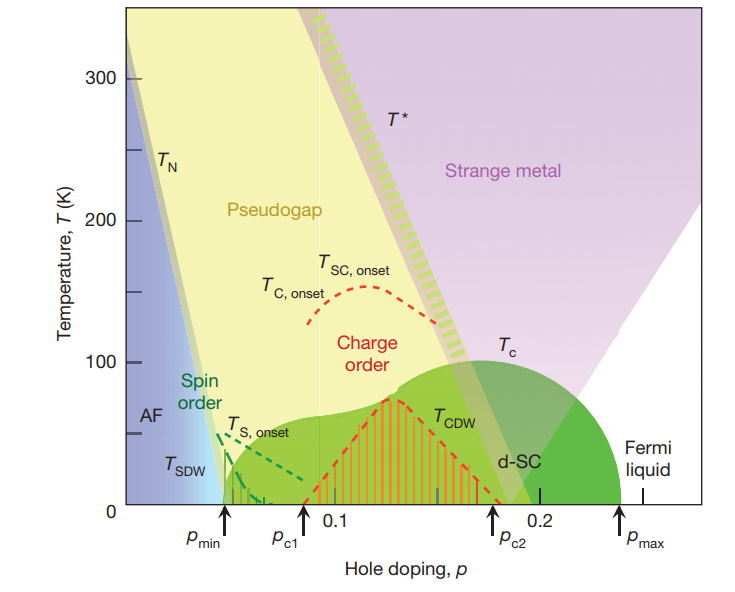
Mott Physics in Correlated Lattices
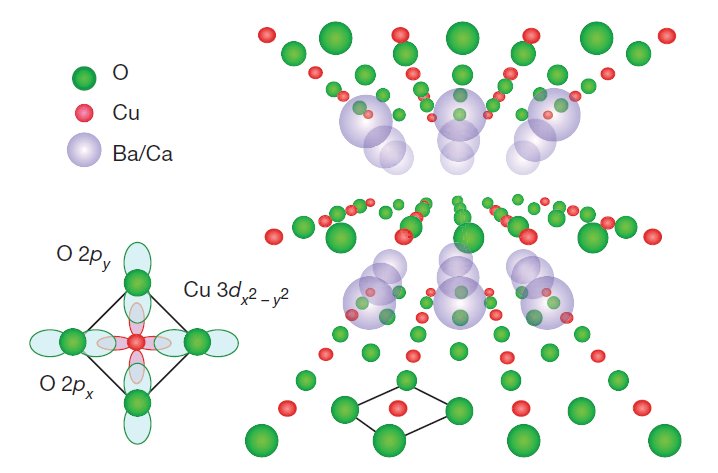
From the cuprate puzzle through the Hubbard model's weak- and strong-coupling limits to a full Dynamical Mean-Field Theory study of the Mott metal–insulator transition and its comparison with V₂O₃ — every derivation, figure, and result, worked out in full across 6 browsable topics.
Ways in
One body of work, read through any lens — every listing below is derived automatically from each topic's facets.
- Theory Models, symmetries, and analytic structure — Hamiltonians, Green's functions, and the methods that solve them.
- Experiment The observable side: what ARPES, STM, optics, and scattering measure — and the theory quantities they map onto.
- Computation Numerics and reproducible workflows — exact diagonalization, QMC, tensor networks, DMFT and cluster solvers — with notebooks and live plots.